Title: Jackals and Arabs
Author(s) Name(s): Franz Kafka
Published in: 1917
Why You Might Like This Book: Read this book if you enjoy
- philosophy,
- politics,
- political fiction,
- political satire,
- dark humour,
- dark short stories,
- battling oppression,
- political criticism,
- criticism of ideologies,
- criticism of lack of awareness of the self and society,
- absurdist humour,
- anti-authoritarianism,
- classic literary fiction, and
- race, culture, religion, and ethnicity.
Who Should Avoid This Book: Avoid this book if you are triggered by or dislike
- war,
- oppression,
- imperialism,
- domination,
- victimization,
- hate,
- subjugation,
- communal hatred,
- inter-state violence,
- racism,
- occupation,
- abuse of power,
- identity politics,
- antisemitism,
- Zionism, or
- shame.
Jackals and Arabs may not be the most popular work of the author but it is one of Franz Kafka’s most controversial short stories. One of the points that makes Kafka’s views controversial for his followers and fans, especially in the context of this story, is that Kafka is seen as one of the greatest political thinkers and philosophers who had been leftist and anti-authoritarian. Most of his works are about how the oppressed deal with their oppression or rather what not to do and what about human nature makes authoritarianism hard to kill. His themes are often centered around human psychology, misuse of power, fear, guilt, exhaustion, loneliness, and such. It is because of these works that many leftists regard him as a political genius. But Kafka himself was interested in the early Zionist movement. And leftists strongly oppose Zionism!
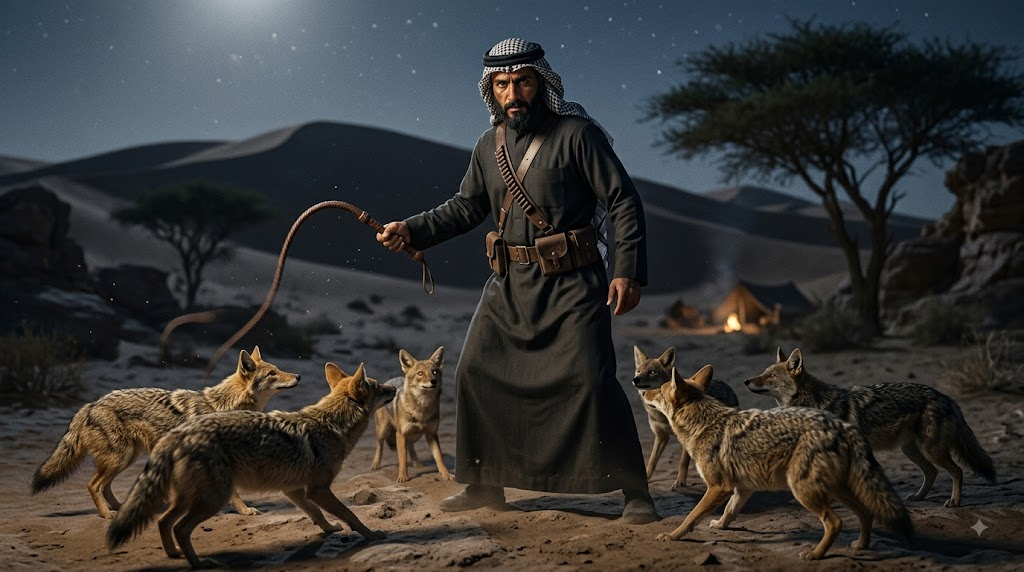
To understand what other reasons could make this controversial, you should read the story. There is this visitor from up north to some place in the middle east, we assume. He is accompanied by the Arabs, when he notices the jackals. When the Arabs are asleep, the leader of the pack of the jackals, the oldest approaches the visitor and initiates a conversation. The animal tells the man that they all like to be freed and their hope is restored when they see him, that they would not fear the Arabs because they are not cowards. The man remarks that this is a long-standing conflict between them and the jackal assertively says that there will be blood and they will win. Soon, an Arab man steps in, notices the jackals, cracks his strong whip and the jackals run away in fear. The Arab man explains the situation to the visitor, saying that these animals would act as if they are fearless, but he has now got a camel’s carcass for them, which he would throw away for them to eat. And exactly as he predicted, the pack of jackals rush towards the dead camel that he offers and they seem to have forgotten everything else, all their ideals, their purpose, their fight. And when he cracks his powerful whip again, they all get scared and run away. This is all they are meant to be, this is all they ever can be because they are idiots who can be easily controlled, says the Arab man cheerfully.
The story allegorically describes fear, shame, pride, purity, control, power, dependence, helplessness, and hope. Kafka describes the olden day Jews in the middle east as a group of people who want to fight for what they believe to be their rights against the Arabs, as those who seek the help of any foreigner who comes their way, but no matter how confident they sound, at the end of the day, they are completely dependent on the Arabs and thus remain controlled by them, fearing them. The author implies that you can claim to have a strong sense of pride and courage and that you wouldn’t give in, but reality is often different, that there will be no overturning of power until dependence on your oppressor happens to be the norm. This is an interesting short story for those who enjoy history and politics. Even though you can finish reading the story in a few minutes, it will leave you thinking deeply and debating different perspectives. I would give this a 4-star rating.